Yunnan's Four Tea Regions: Xishuangbanna, Pu'er, Lincang and Baoshan
Yunnan's tea map is usually drawn as four regions — Xishuangbanna, Pu'er, Lincang and Baoshan. It is a sourcing filter, not a flavour guarantee. Of the 26 lots in our catalogue, 10 come from Xishuangbanna, 7 from Lincang, 7 from Pu'er, 2 are cross-region blends, and none come from Baoshan.
What a region name actually tells you
A region narrows three things: the large-leaf tea populations you are likely to meet, the altitude band, and the local processing habit. It does not narrow the cup. Two of our lots sit in the same township — Bangdong, in Lincang — and have almost nothing in common: Xigui sits in a river valley at 750–950 m, while Bangdong Old Village sits a thousand metres above it at 1,750–1,900 m.
- Useful for: building a shortlist, planning a sampling trip, grouping lots for pressing and quality checks.
- Useful for: explaining to a customer why two cakes with the same category name taste different.
- Not useful for: predicting a cup from the region alone, or treating one region as a higher grade than another.
Our 26 lots, by region
| Region | Lots | Altitude span | What we press there | Why buyers usually pick it |
|---|---|---|---|---|
| Xishuangbanna | 10 | 1,300–1,980 m | Raw Pu-erh, ripe Pu-erh, purple bud | Structure and aroma, plus the mountain names buyers already know |
| Lincang | 7 | 740–2,100 m | Raw Pu-erh, Dian Hong black tea | Sweetness with a mineral edge, and the widest altitude range we work with |
| Pu'er | 7 | 1,400–2,271 m | Raw Pu-erh, ripe Pu-erh, Yunnan white tea | Forest-garden aromatics, and our entire white-tea line |
| Baoshan | 0 | — | — | Not currently sourced |
| Cross-region blends | 2 | Varies by garden | Raw Pu-erh, Dian Hong black tea | A house profile that stays consistent year to year |
The two cross-region entries are deliberate blends — a Fengqing and Menghai dual-zone black tea, and a loose raw Pu-erh drawn from rotating named gardens — so they are counted separately instead of being assigned to one region.
Xishuangbanna: 10 lots, 1,300–1,980 m
This is the part of the catalogue most buyers recognise by name: Pasha and the Banzhang villages in Menghai, Nannuo Mountain, and the Yiwu side over in Mengla. Menghai-side lots are the ones we usually send when a customer asks for structure — firmer body, a clear turn from bitterness into sweetness, obvious aroma. The Mengla side, Yiwu and Wangzi Mountain, runs softer and more honeyed, and sits noticeably lower at 1,300–1,500 m.
The spread inside a single village matters as much as the spread between regions. Pasha New Village at 1,800–1,940 m and Pasha Rhino Pond at 1,820–1,960 m are neighbours with different tree-age bands — 300–600 years against 400–650 — and we keep them as separate lots rather than blending them into one “Pasha”.
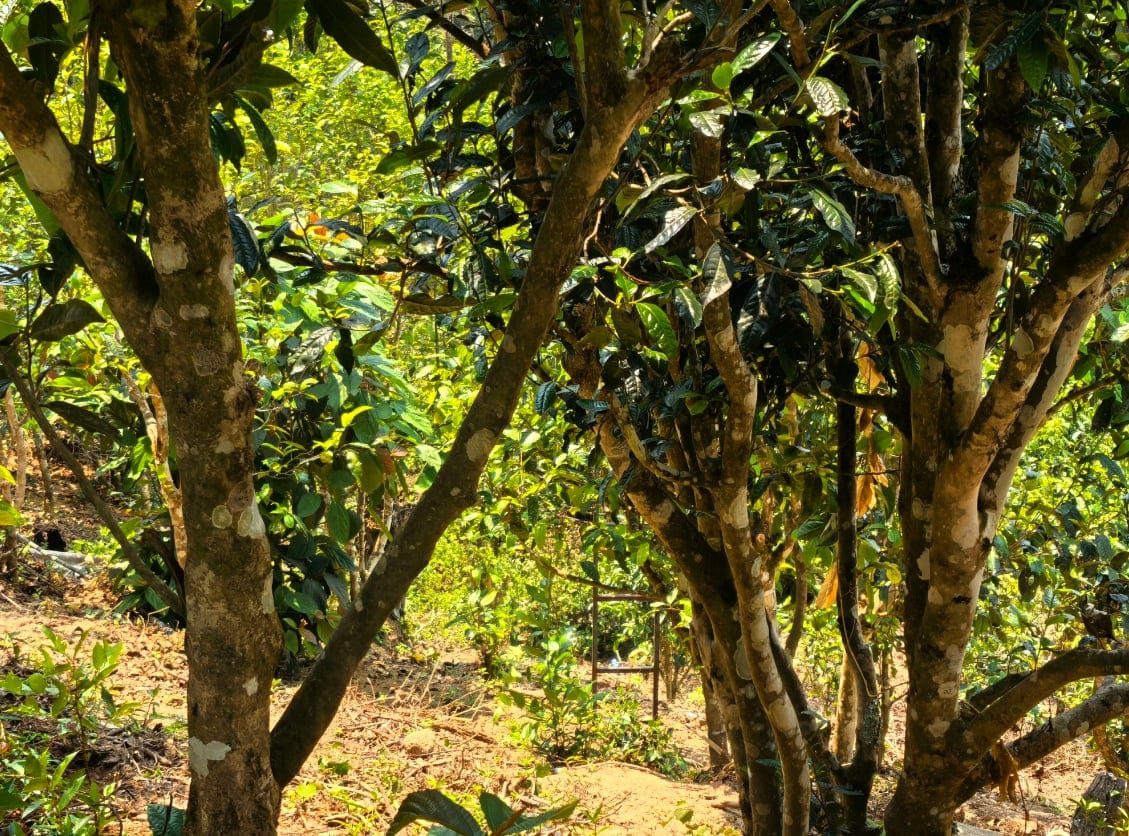
One example is Pasha Rhino Pond Ancient-Tree Raw Pu-erh, with its altitude, tree-age band and tasting record on the lot page.
Lincang: 7 lots, 740–2,100 m
Lincang gives us the widest altitude range in the catalogue and the clearest counterexample to altitude-as-grade. It also carries the only Dian Hong origin we work with, Fengqing at 1,800–2,100 m, and the Yongde Daxue Mountain reserve fringe at 1,900–2,100 m, where the material is wild-transitional rather than garden-cultivated.
Bingdao and Xigui are the two names buyers ask for by default. Both are real, both are expensive, and both are routinely counterfeited — which is why we quote them by village and altitude rather than by the regional name.
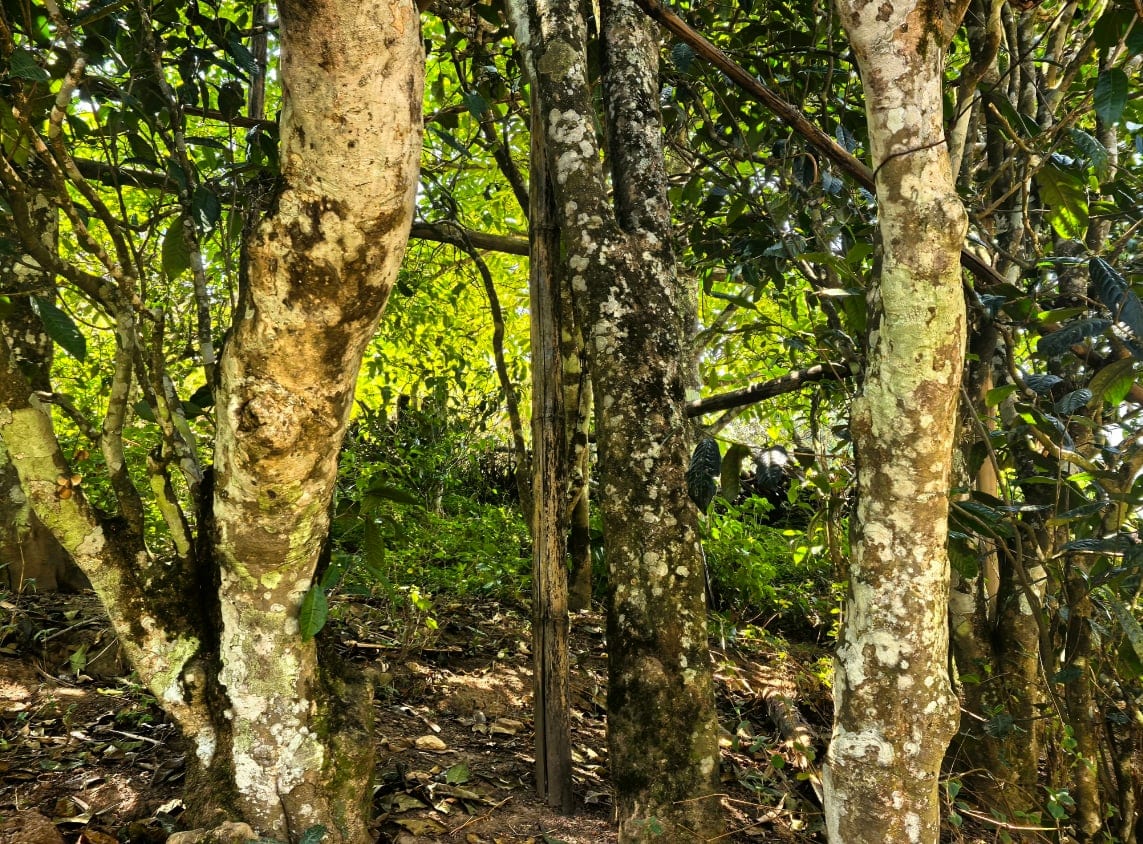
One example is Lincang Xigui Ancient-Tree Raw Pu-erh, with its altitude, tree-age band and tasting record on the lot page.
Pu'er: 7 lots, 1,400–2,271 m
Pu'er the prefecture is not Pu-erh the tea, and the distinction is worth making to a customer. Our Pu'er-prefecture lots include Jingmai Great Village at 1,400–1,600 m in both raw and ripe form, Kunlu Mountain in Ning'er reaching 2,271 m, and the Jinggu gardens that supply our entire white-tea line.
If a buyer wants Yunnan white tea, the answer is almost always Jinggu: Dian Bai and Moonlight from Minle, the Yangta Old Village royal white, and the 2024 Signature white from a custom garden. That is four of our seven Pu'er-prefecture lots — not something the regional map would have predicted.
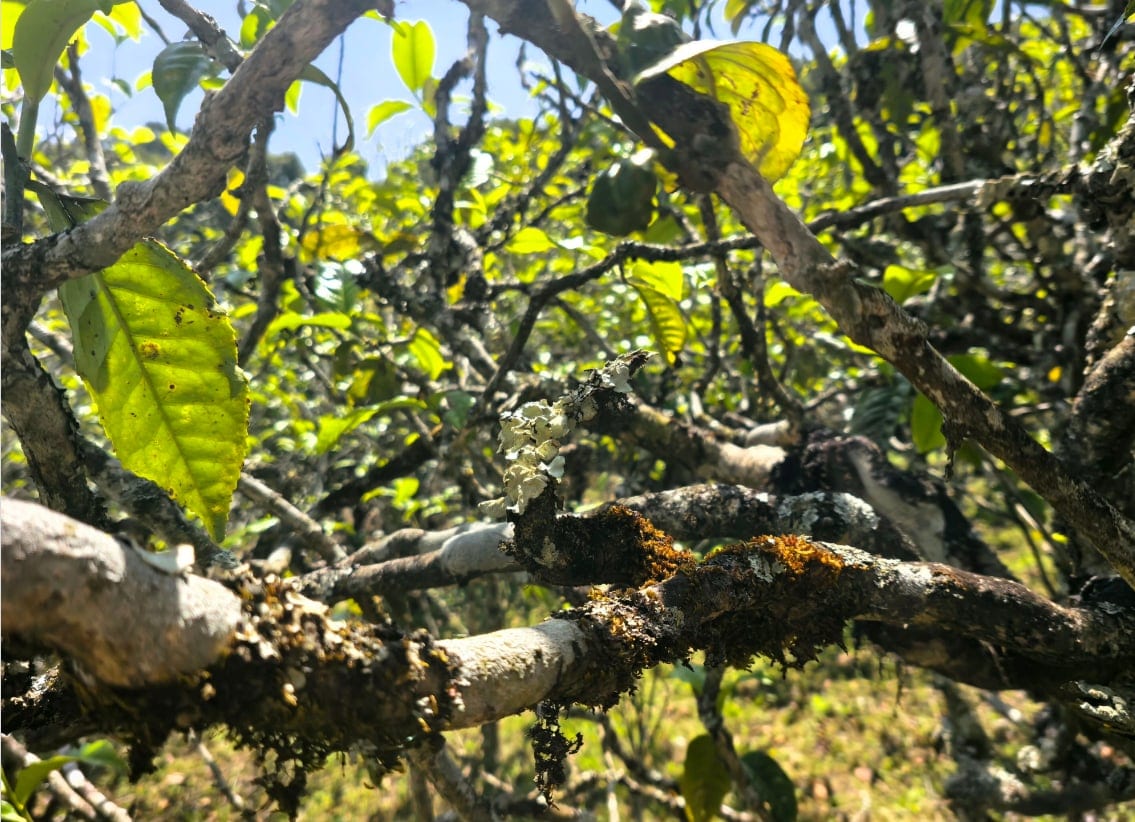
One example is Jingmai Great Village Ancient-Tree Raw Pu-erh, with its altitude, tree-age band and tasting record on the lot page.
Baoshan: why there is nothing here
Baoshan — Changning and the Gaoligong side — produces black, green, white and Pu-erh tea, and it belongs on any honest map of Yunnan. We have no Baoshan lot. Rather than describe a house flavour we cannot ship, we leave the row empty. If a programme genuinely needs Baoshan material, that is a sourcing project with its own sampling round, not something we can pull from stock.
Altitude is not a quality ladder
The industry shorthand that higher means better does not survive contact with our own lot list. Xigui, at 750–950 m, is one of the most expensive raw Pu-erhs we sell; its river-valley heat and mineral soil give it the rock-sugar sweetness it is known for. Yongde Daxue Mountain, at 1,900–2,100 m, is a different tea for a different customer — not a better one.
- Xigui, Lincang — 750–950 m — river-valley garden, rock-sugar sweetness, mineral finish
- Nannuo Yakou Old Village, Xishuangbanna — 1,850–1,980 m — material from a single tree over 800 years old
- Kunlu Mountain, Pu'er — 1,410–2,271 m — the widest altitude span inside one lot in our catalogue
What altitude does change reliably is the length of the growing season and the thickness of the leaf, and that shows up in how a tea ages rather than in how it tastes in month one. It is a reason to ask for the harvest year and the lot number, not a reason to sort regions into tiers.
How to use the map when you sample
-
Pick the axis, not the region
Decide first whether you need structure, sweetness, aroma or ageing potential. That axis points at two or three villages; the region is just where they happen to sit.
-
Compare inside one category
Put raw Pu-erh against raw Pu-erh. Comparing a Lincang raw against a Jinggu white tells you about processing, not about origin.
-
Ask for village and altitude on the bag
A sample marked only “Lincang” gives you nothing to re-order against. “Xigui Village, Manglu Mountain, 750–950 m” does.
-
Keep one control sample
Re-order against the retained sample rather than the tasting note. Ancient-tree lots move from year to year, and a written note quietly drifts with them.
What this means for a first order
For most first orders we suggest two or three lots from two different regions within the same category, plus one deliberate outlier. That gives a buyer something to compare instead of a single tea to accept or reject, and it settles the house-style question — structure or sweetness — in the first round rather than the third.
Related reading: How to read a Yunnan ancient-tree tea label · Raw vs Ripe Pu-erh: what's the difference?
Frequently Asked Questions
What are Yunnan's four tea regions?
Xishuangbanna, Pu'er, Lincang and Baoshan. The division is geographic and administrative rather than a flavour classification, and it works best as a first filter when you are building a sampling shortlist.
Which Yunnan regions do your teas actually come from?
Of our 26 lots, 10 are from Xishuangbanna, 7 from Lincang, 7 from Pu'er prefecture and 2 are cross-region blends. We currently have no Baoshan lot, so we do not claim a Baoshan house flavour.
Does a higher-altitude Yunnan tea taste better?
No. Xigui in Lincang grows at 750–950 m and is one of the most expensive raw Pu-erhs we sell, while lots above 1,900 m are different in character rather than better. Altitude mainly changes the growing season and leaf thickness, which affects ageing more than the first infusion.
What should a Yunnan tea sample bag say?
Village or garden, mountain, altitude range, harvest year, category and lot number. A region name on its own cannot be re-ordered against.